History & Story
The Judge Huddlestone - A Surviving Fragment of the Medieval House
This room is believed to have formed part of Lady Sackville's private residence in the 15th century. Its panelling is especially significant because it was taken from the oldest part of the earlier medieval house and installed here, a sign of how valuable and respected the carved timberwork was. Rather than being discarded during later alterations, it was preserved and reused within this important room.
Among the most remarkable features are carvings of Green Men and noble women. The Green Men connect the room with medieval ideas of nature, protection, renewal, and symbolic guardianship, while the carved noble women suggest the importance and visibility of women of high status. Their presence helps visitors imagine a medieval household in which noble women, including Lady Sackville, held authority, influence, and respect.
Today, the Judge Huddlestone room invites guests to look beyond its later legal associations and recognise one of the house's deepest medieval survivals. It is a room of private residence, valued craftsmanship, noble symbolism, and long memory.
Personal Restoration Note
Restoring this room made us feel very close to the earliest story of Stone Court House. The reused panelling, carved figures, and sense of private medieval life made the room feel less like a later judges' space and more like a surviving fragment of Lady Sackville's world.
THE RESTORATION
Before & After - The Judge Huddlestone Restored
Later hotel fittings were stripped out to recover the room's medieval character, with the reused panelling and its carved figures treated as the most important survivals in the space.
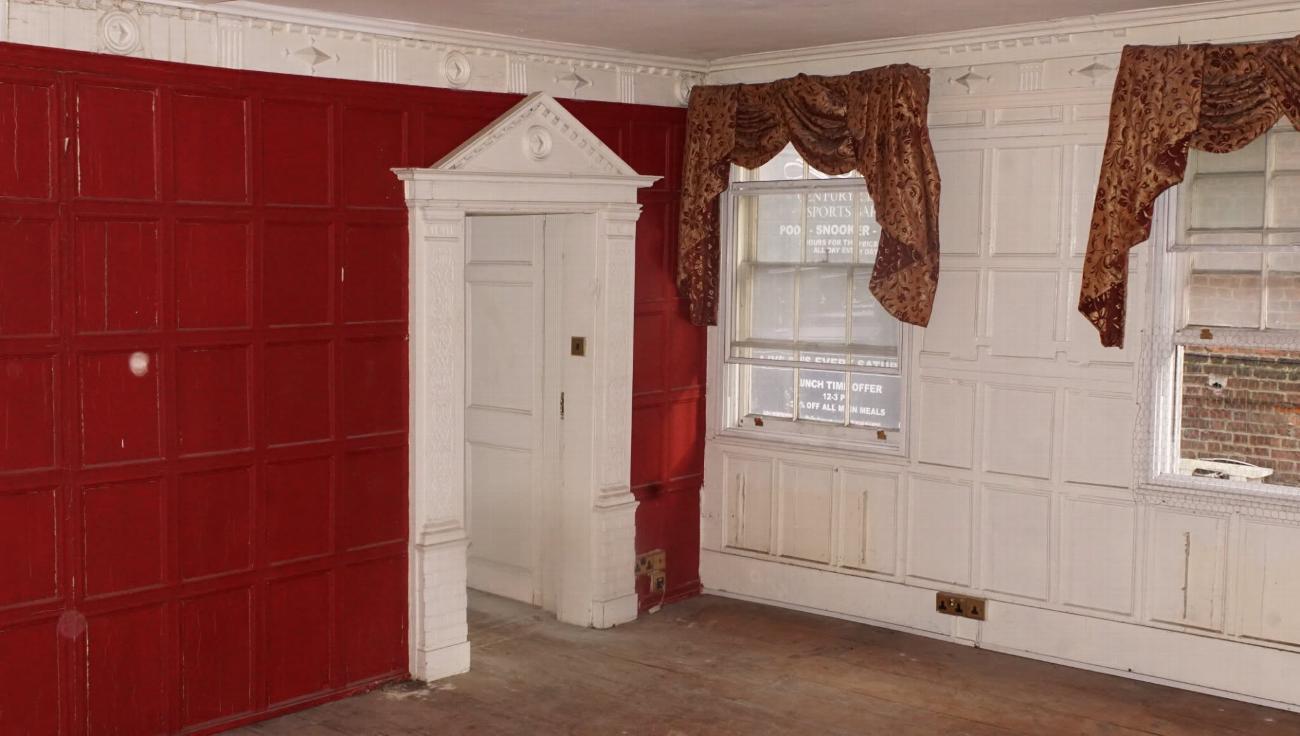
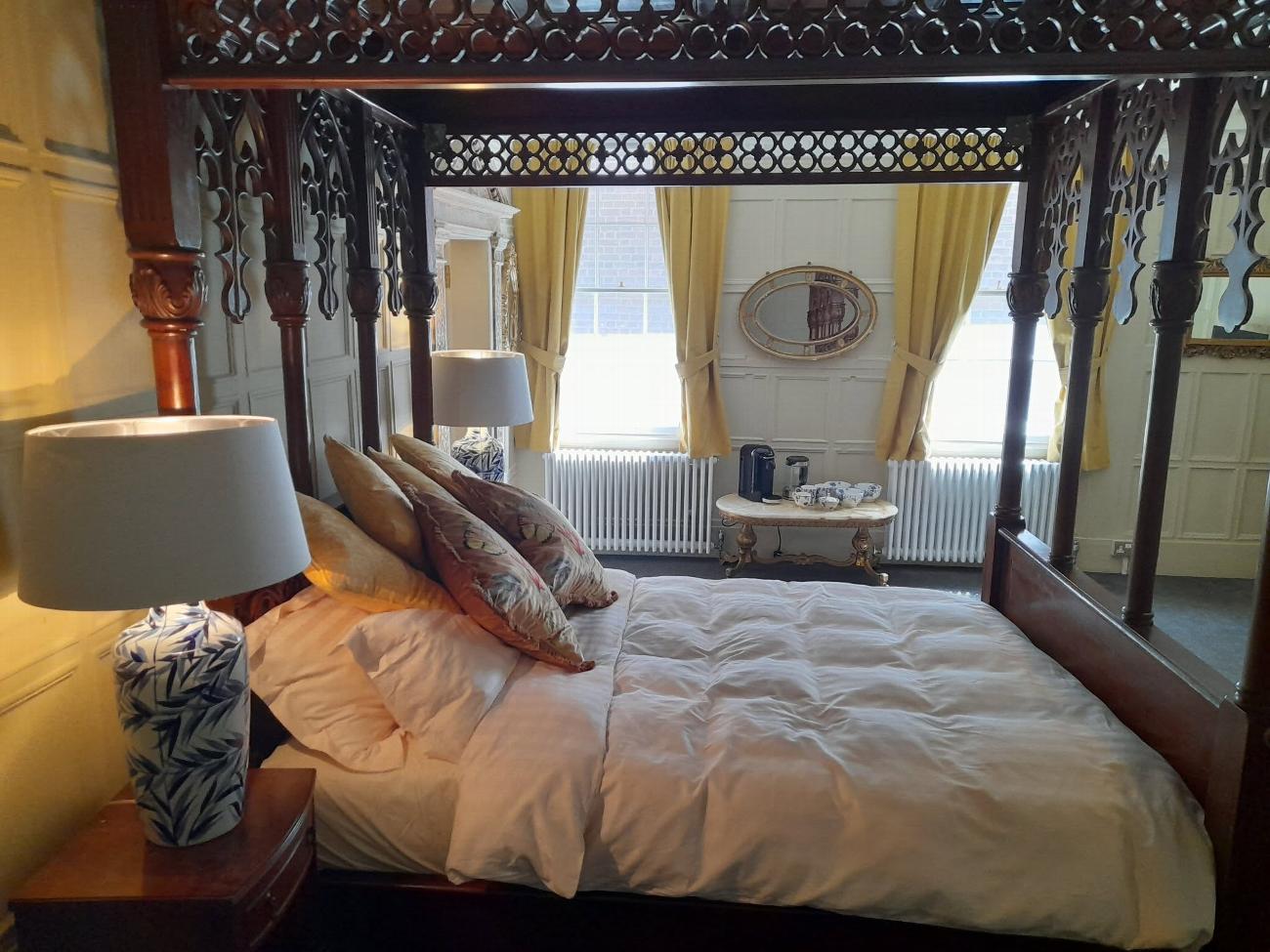
The room as it was found, and the carved four-poster bed that now stands within Lady Sackville's medieval walls.
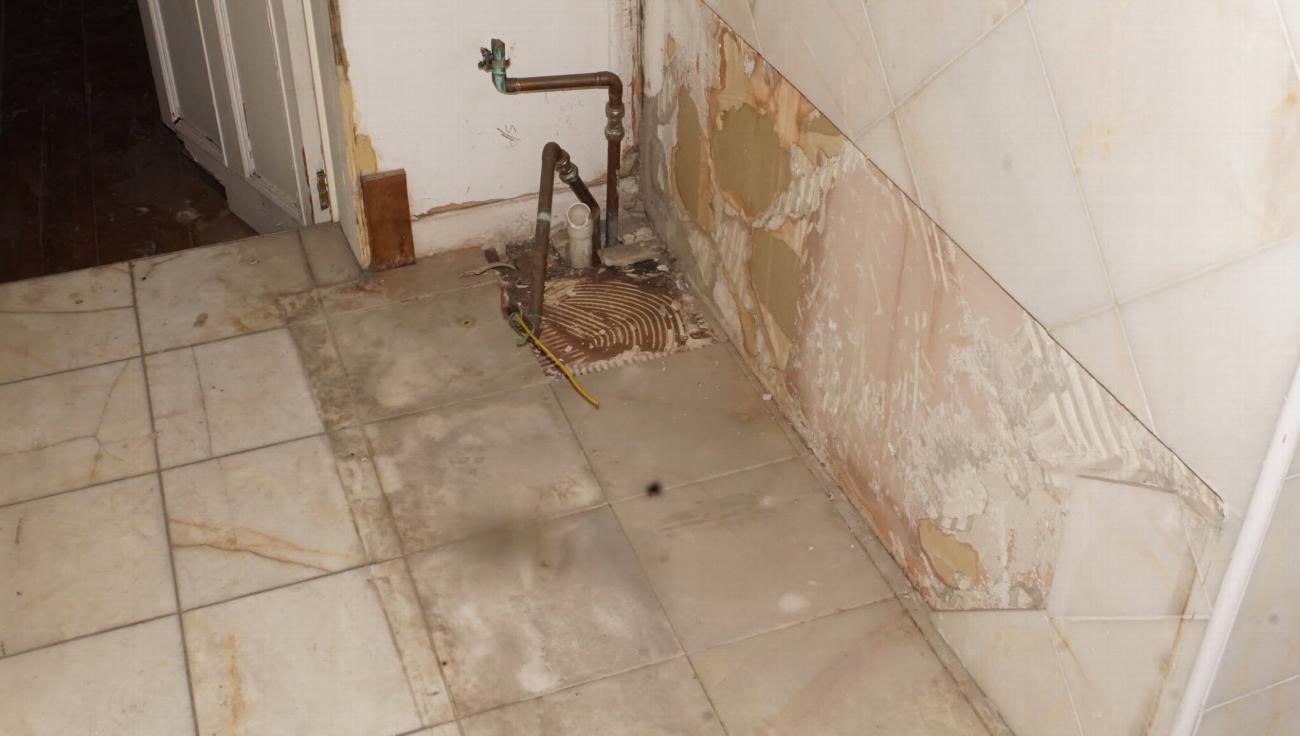
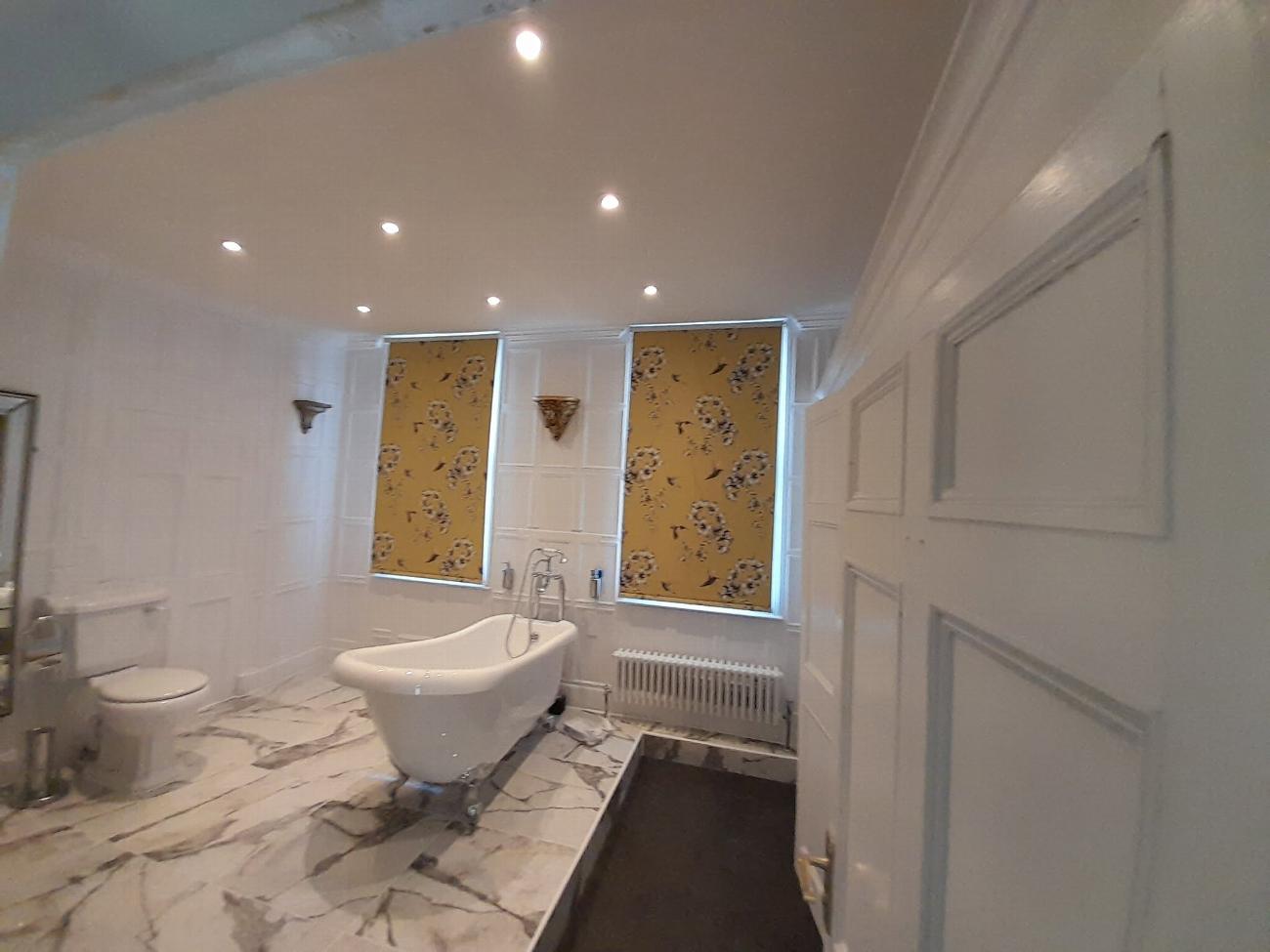
Tired hotel plumbing and tiling replaced with fittings in keeping with the age of the room.
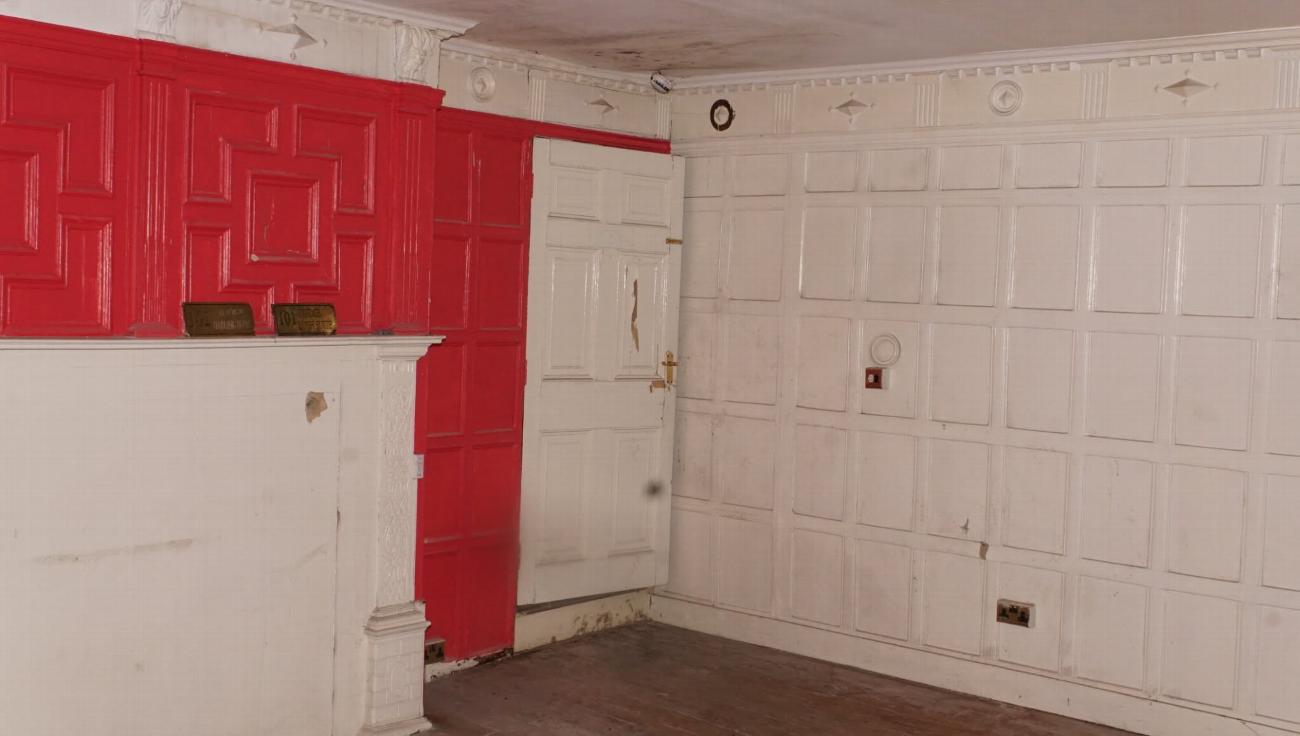
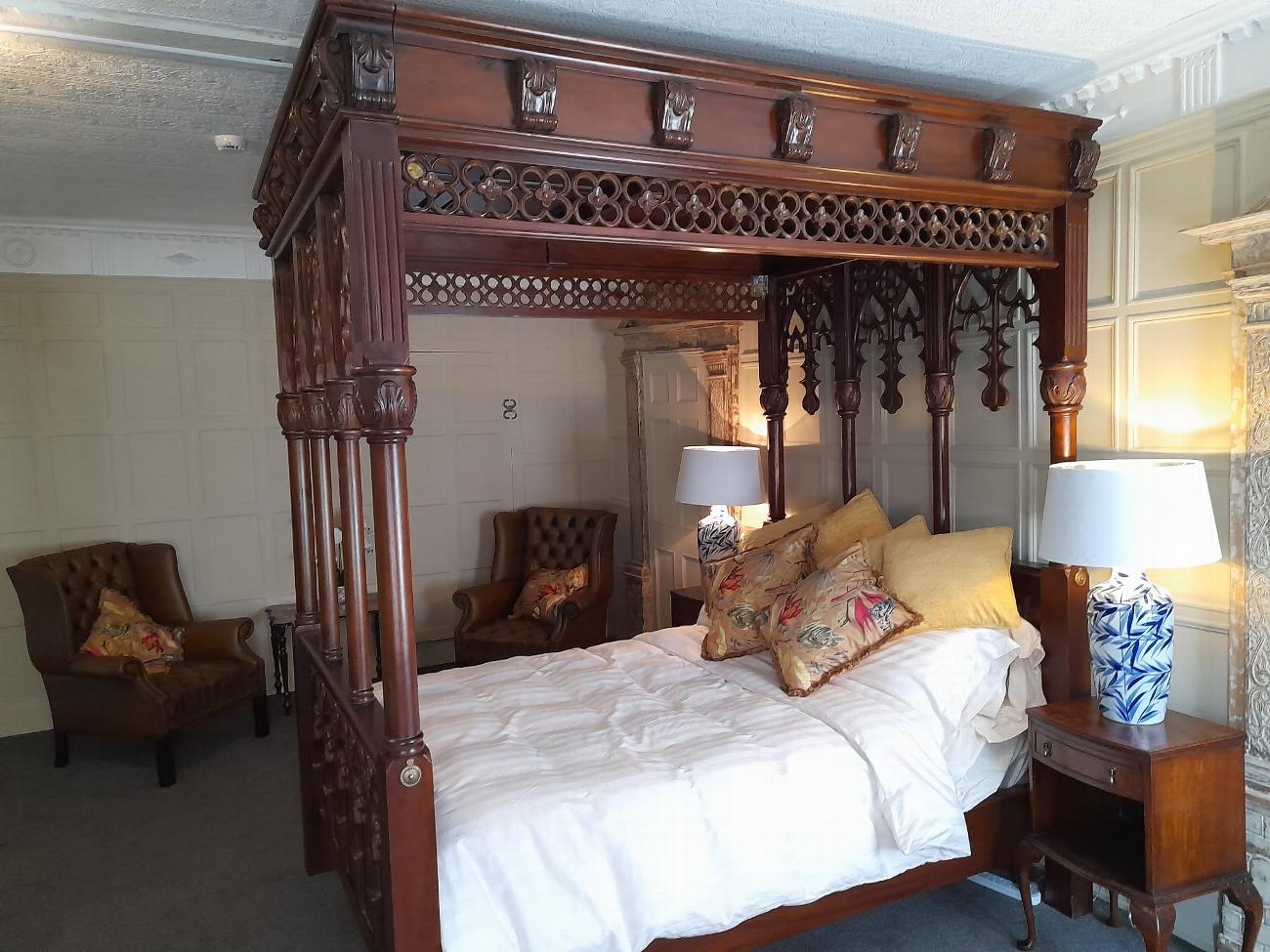
Later alterations removed so the older fabric could lead the room again.
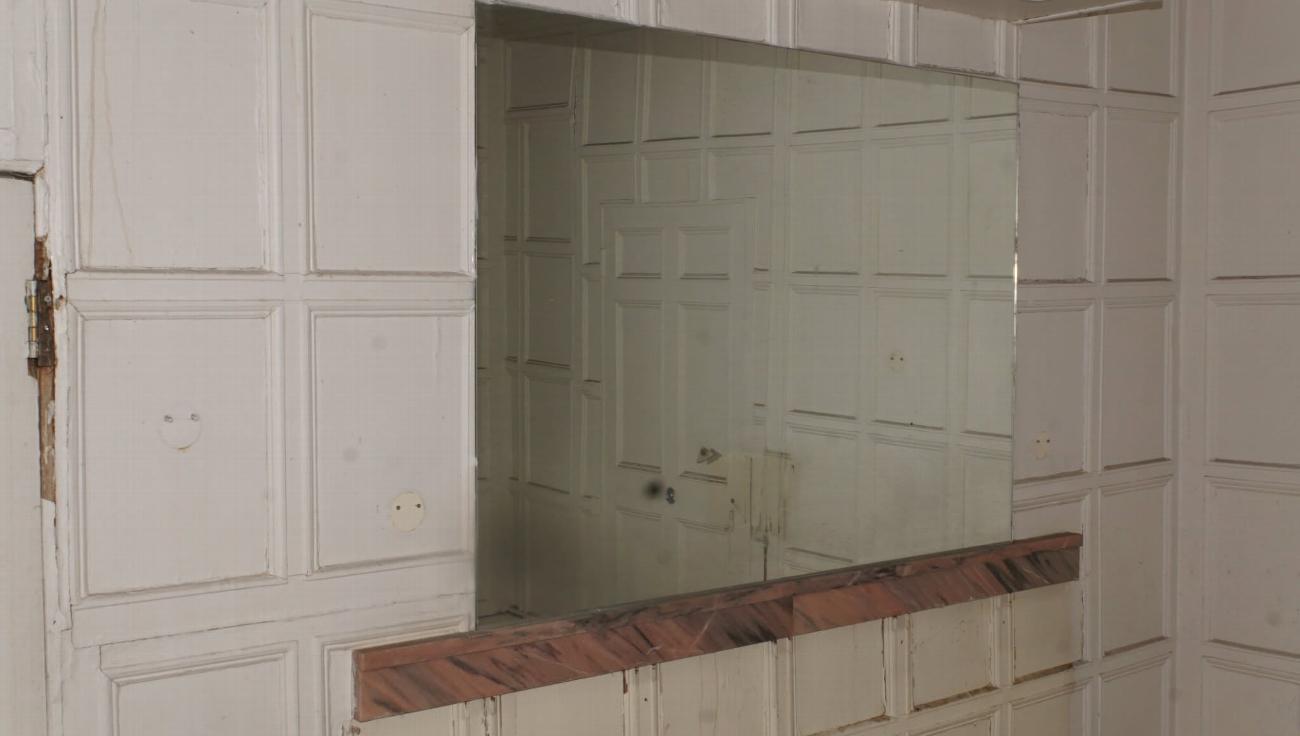
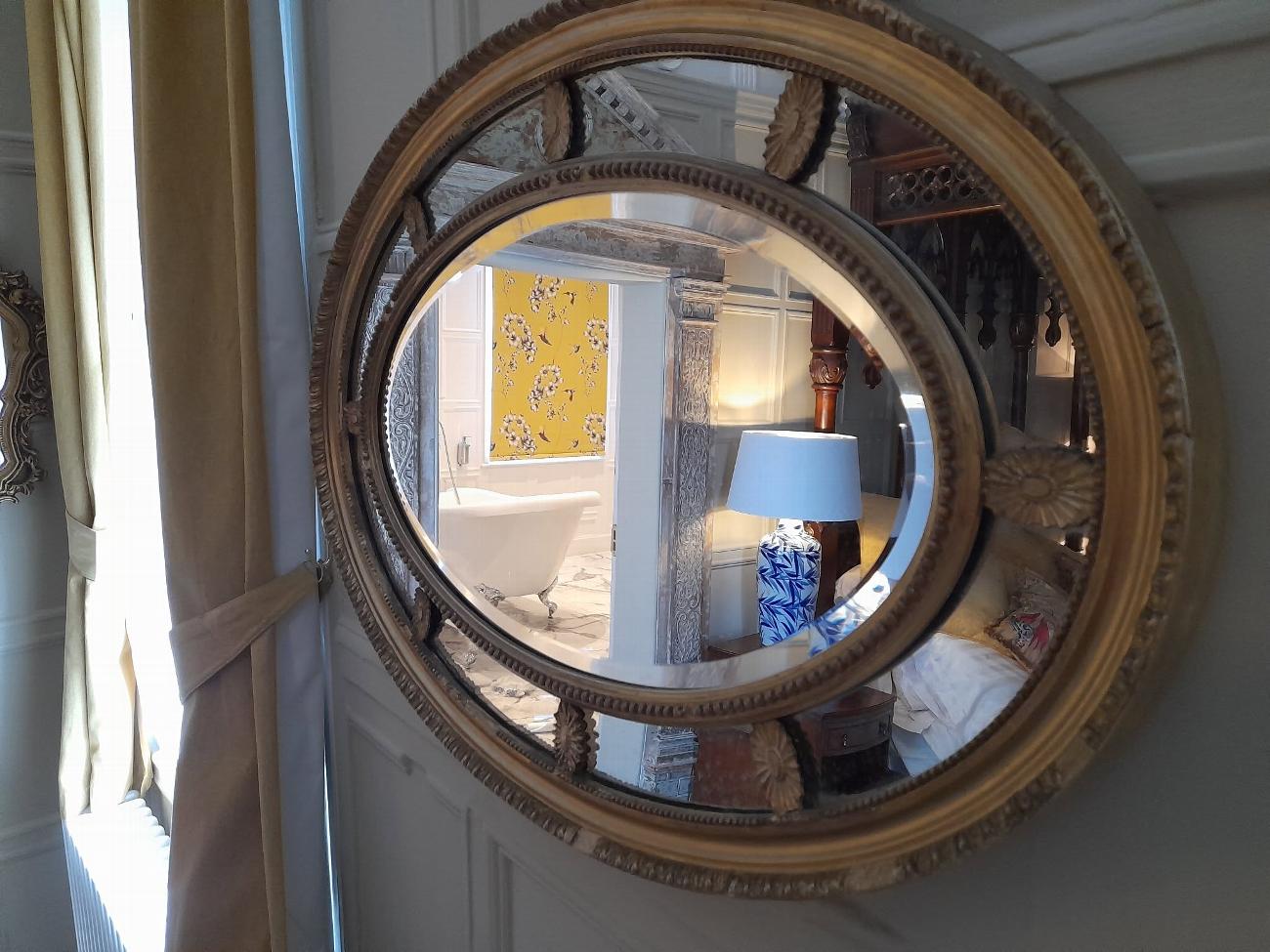
Bare plaster giving way to the finished detail of a room six hundred years in the making.
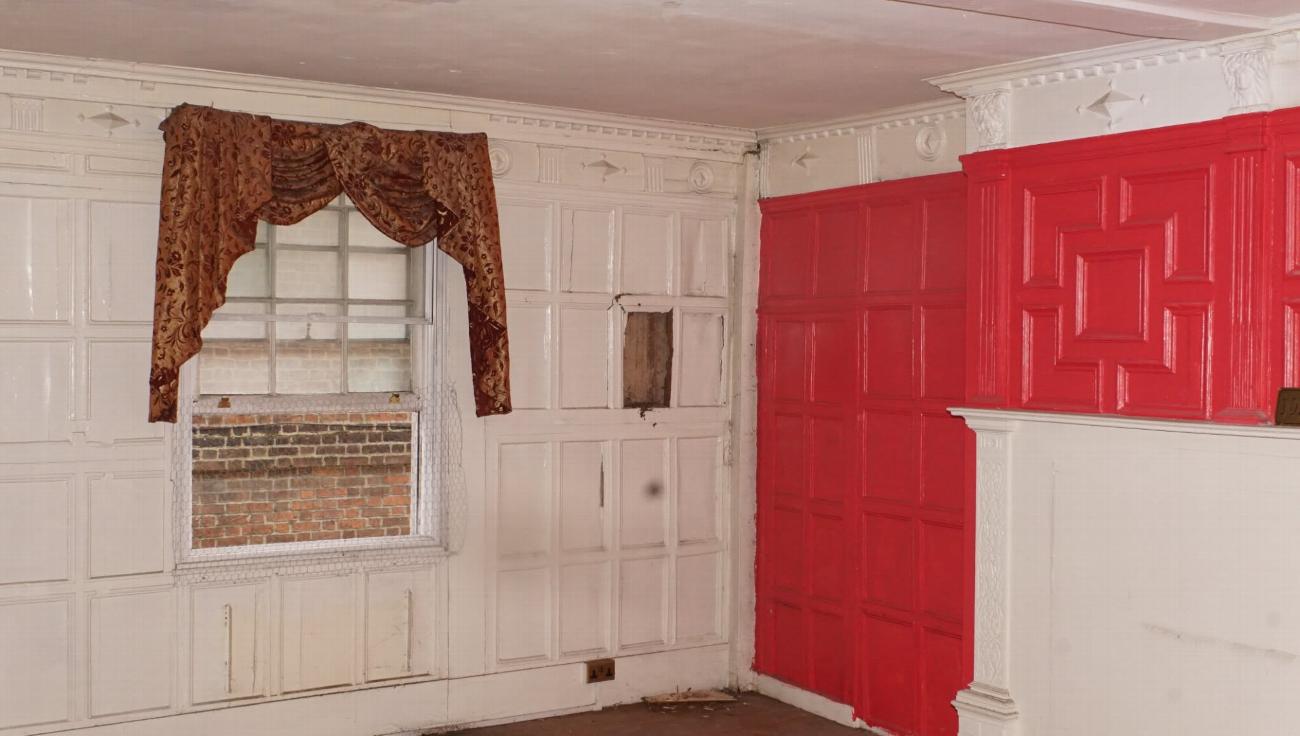
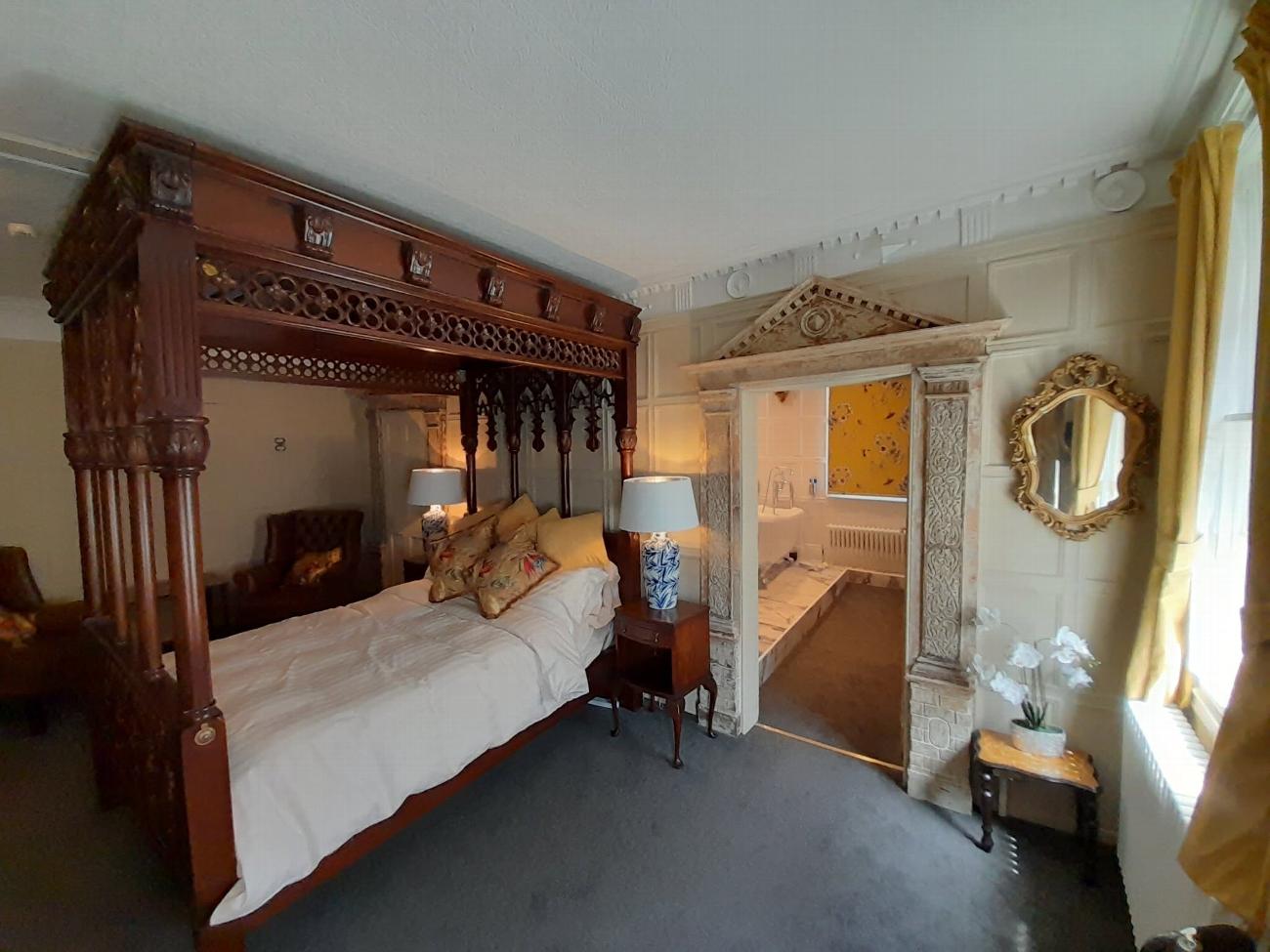
The reused panelling and its carvings of Green Men and noble women, preserved rather than replaced.
Historical Significance
One of the deepest medieval survivals in the house, holding panelling reused from the oldest part of the earlier building and carvings that speak of noble status and long memory.
Did You Know?
The room is believed to date back at least six hundred years.
The room is associated with Lady Sackville's 15th-century private residence.
Carvings of Green Men symbolise nature, protection, and renewal.
Its valuable panelling was taken from the oldest part of the former medieval house and carefully reused here.
Carved noble women suggest the status, authority, and respect held by women of high rank in the medieval household.
WEDDINGS AND ACCOMMODATION · MAIDSTONE, KENT
Book Your Wedding At Stone Court House
Uncover the details, beauty and atmosphere that have made us Maidstone's top rated wedding venue.
Arrange a private wedding venue tour and step into history for your big day.
01622 200391
WEDDINGS | ROOMS & SUITES | MEETING & EVENTS | SPECIAL OFFERS | ABOUT | CONTACT
