History & Story
The Entrance Hall - The Gateway to Stone Court House
Extended during Maidstone's Georgian expansion while incorporating medieval fabric from some seven hundred years ago, the Entrance Hall was created in 1716 as a controlled gateway into the judicial world. Visitors arriving here would wait to be acknowledged before being permitted deeper into the building. The symmetry of the architecture, the height of the ceilings, and the weight of the original doors were all intentional, conveying seriousness, order, and respect for the law.
During the restoration, which began in August 2019 before the Covid pandemic, Saban and Belinda uncovered a two-storey medieval wall, believed to be the oldest surviving part of the house and dating back at least to the 14th century. The discovery of a medieval spring well in the cellar, still containing fresh spring water, suggests that Stone Court House may be even older. The wider Maidstone area has Roman-period evidence, and the historic association of the town with “Stone” makes earlier occupation an intriguing possibility; however, the Roman connection to this exact site should be understood as a possibility rather than a proven fact. The cellar lies around 7ft below the current ground level, a depth that may correspond with earlier ground levels and encourages further investigation into how the site developed over time.
The surviving Georgian bath used by the judges may sit above far earlier remains, and there may even be traces of an earlier bathing structure beneath. Further discoveries include a ground-floor garderobe, or medieval toilet, on the right-hand side near Sir Arthur, the knight in shining armour. Its wooden door lintel can still be seen protruding through the 18th-century staircase. Evidence of a demolished first-floor garderobe was also found, an exceptionally rare feature for its time. During work on the medieval wall, oyster shells, coloured lime plaster, and glass were uncovered; examples can be seen in the display in the Blue Regency Room. These finds suggest that before the building became the Crown Judges' Lodgings, and before the later dark-oak period, this part of the house may once have been brightly decorated in light blues, greens, and yellows. This was likely during the centuries when the Sackville family owned it from the 14th century onwards, before Stone Court House passed to the government through death duties. Every element has been carefully preserved to honour the hall's role as the ceremonial beginning of the courthouse experience.
THE RESTORATION
Before & After - The Entrance Hall Revealed
Work began in August 2019. Beneath layers of later decoration, Saban and Belinda uncovered a two-storey medieval wall believed to be the oldest surviving part of the house.
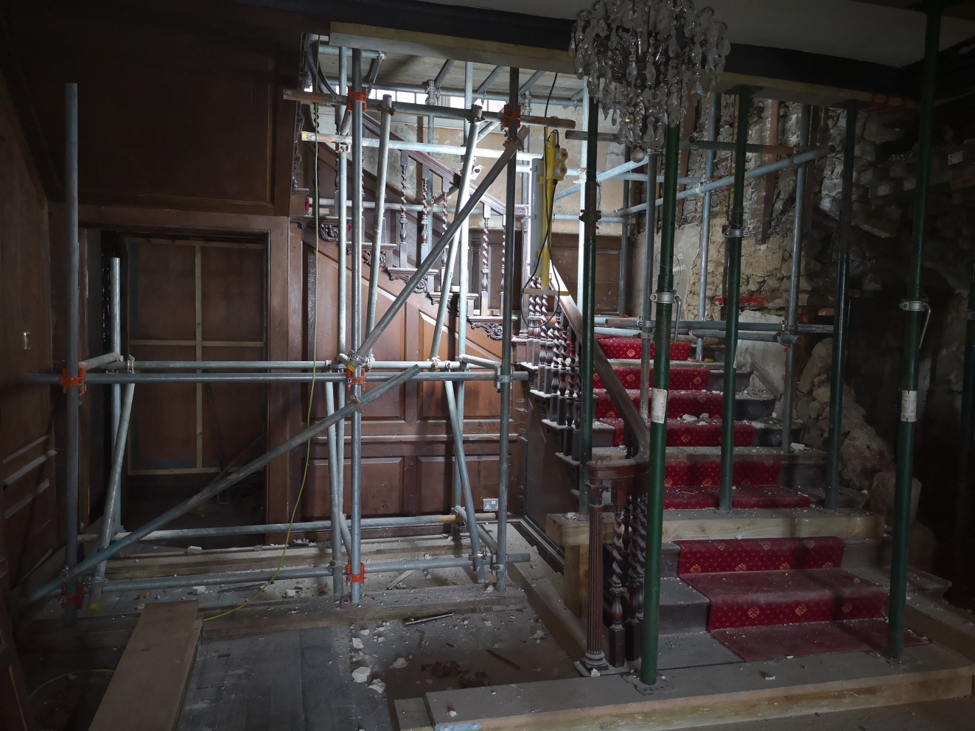
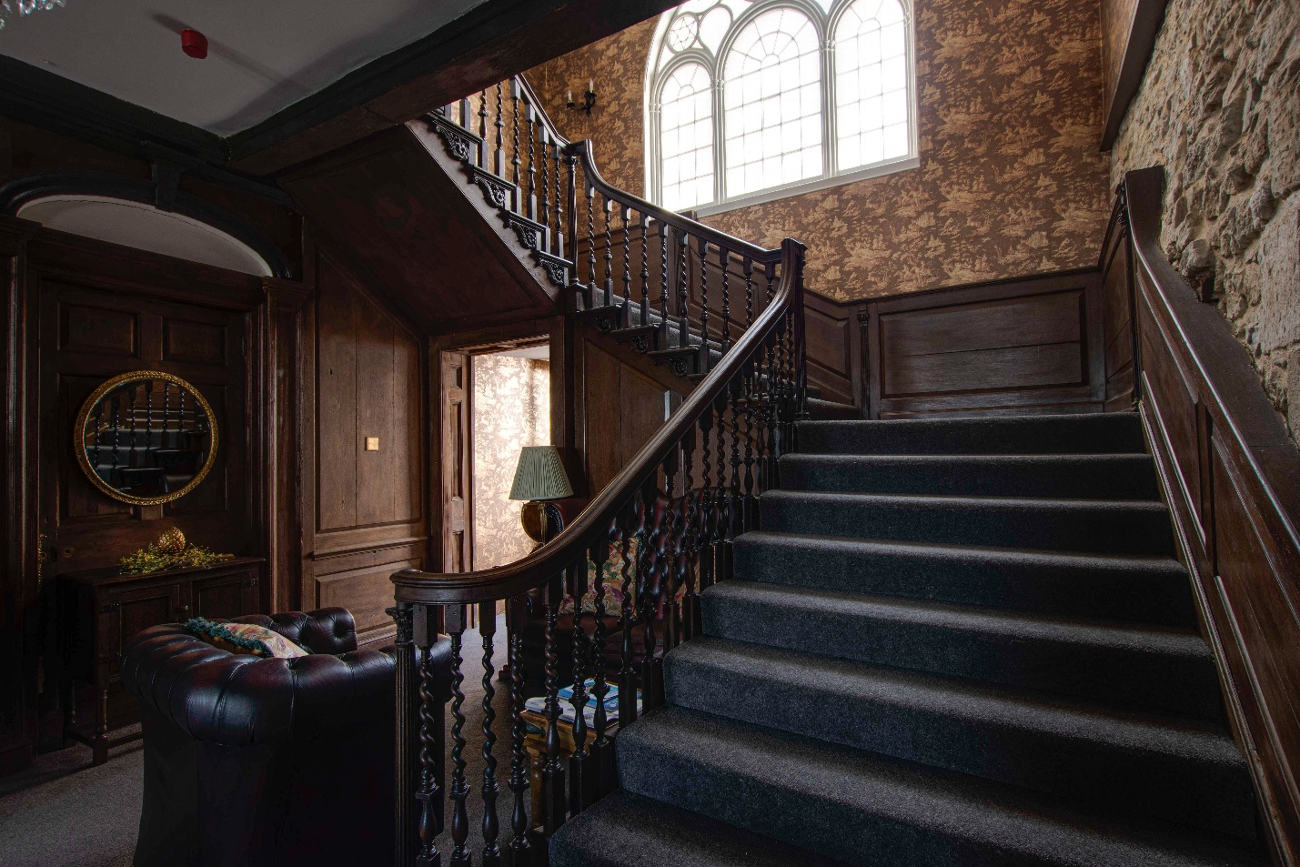
Every original feature was retained and repaired rather than replaced, honouring the hall's role as the ceremonial beginning of the courthouse experience.
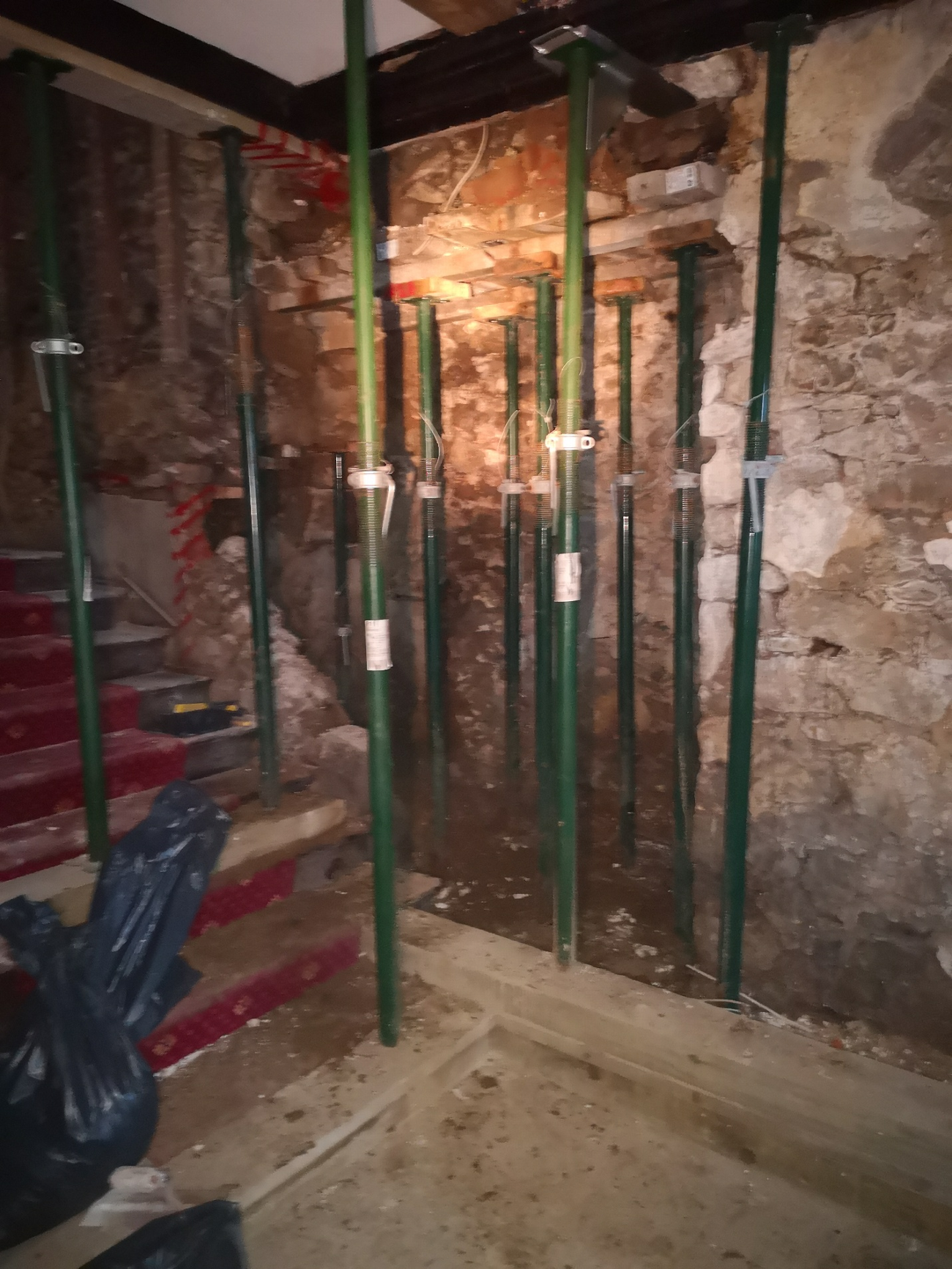
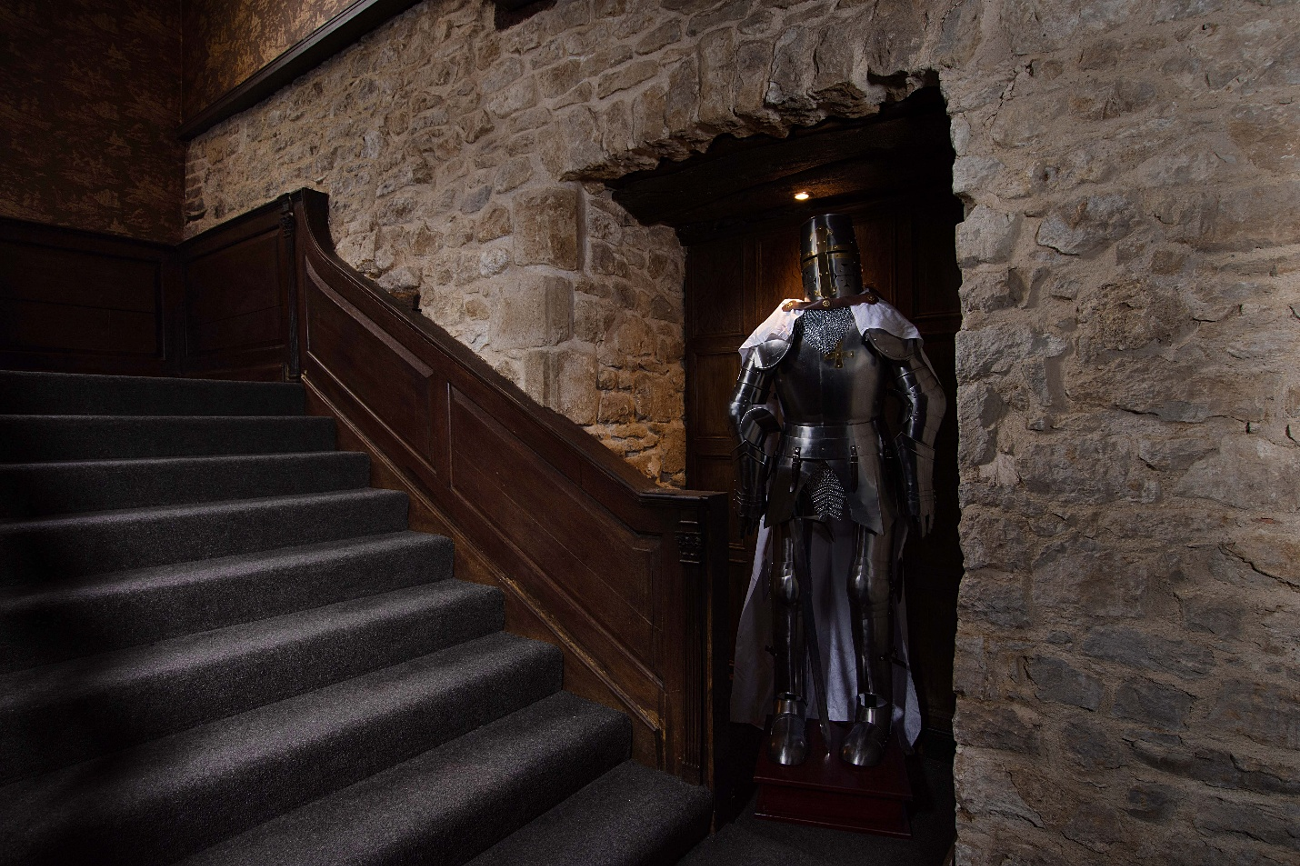
The staircase and medieval wall — propped and exposed during the works, and as they stand today.
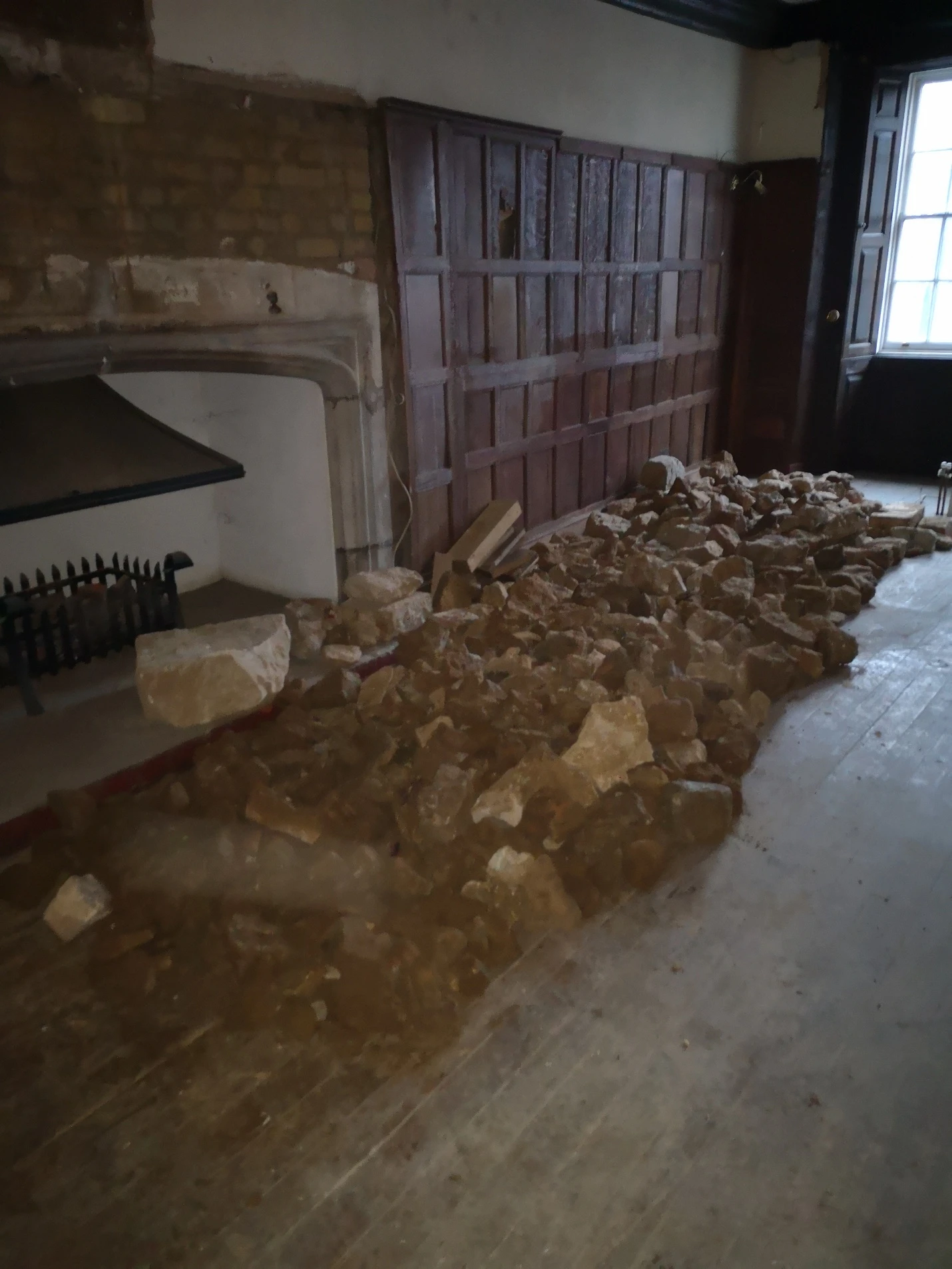
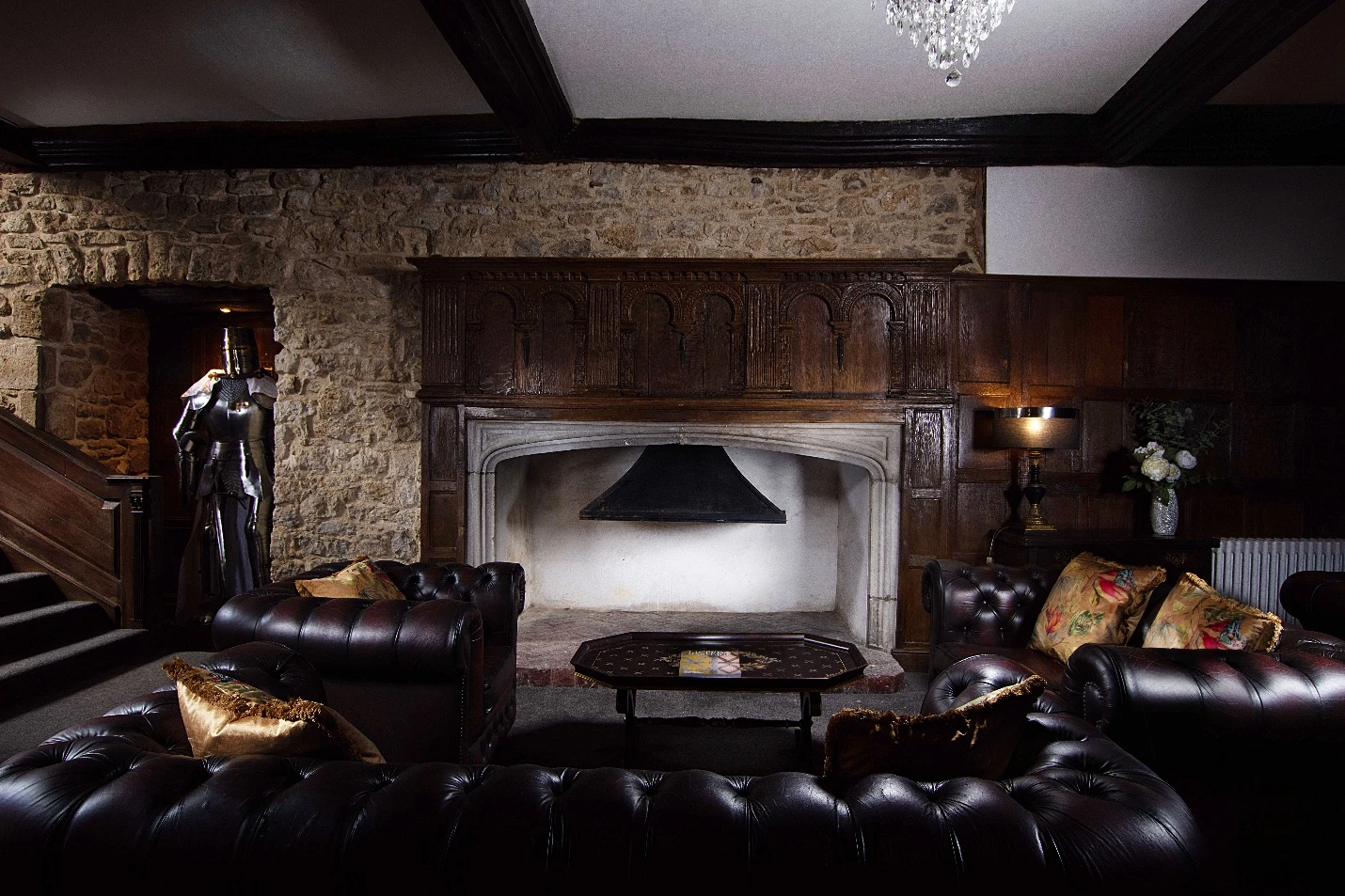
Layers of later decoration stripped back to reveal the medieval fabric beneath, and the hall as visitors find it today.
Historical Significance
Serving as the gateway to centuries of judicial and local Kentish history, the grand entrance reflects original Georgian architectural majesty and timeless authority.
Did You Know?
· The Entrance Hall once displayed public notices and proclamations.
· Georgian architects believed the entrance should set the tone for the entire building. Notice the five- and seven-pointed stars on the window, which may reflect Masonic symbolism and suggest that Stone Court House may once have hosted Freemason meetings attended by judges and local figures.
· The original oak paneling and staircase were handcut and laid by local craftsmen.
· If you shine a light on the square blocks near the original entrance, close to Sir Arthur, you may see a star-shaped witch mark. Such protective marks were traditionally used to guard buildings from harm. Local folklore links this area with Mary, said to watch over the house and its occupants.


WEDDINGS AND ACCOMMODATION · MAIDSTONE, KENT
Book Your Wedding At Stone Court House
Uncover the details, beauty and atmosphere that have made us Maidstone's top rated wedding venue.
Arrange a private wedding venue tour and step into history for your big day.
01622 200391
WEDDINGS | ROOMS & SUITES | MEETING & EVENTS | SPECIAL OFFERS | ABOUT | CONTACT
