History & Story
The Medieval Wall and Tudor Fireplace - Seven Centuries in One Room
During restoration, later coverings were carefully removed to reveal a remarkable section of medieval walling, believed to date back at least to the 14th century. The wall is a powerful reminder that Stone Court House did not begin as a Georgian building, but grew from a far older structure whose fabric still survives within the present house.
Nearby, the discovery of a Tudor fireplace added another layer to the story. Fireplaces were central features of Tudor domestic life, providing heat, status, and a gathering point within the room. Its survival suggests that this part of the house was once an important lived-in space long before its later role as judges' lodgings.
Fragments such as coloured lime plaster, oyster shells, glass, timber details, and earlier openings help build a picture of a richly layered interior. The medieval wall and Tudor fireplace allow visitors to see the house beneath the house: a place shaped by centuries of rebuilding, adaptation, and survival.
Personal Restoration Note
Uncovering the medieval wall and Tudor fireplace was one of the moments that changed how we understood the whole house. It felt as though Stone Court House was suddenly speaking more clearly, showing us that beneath the Georgian rooms was a much older and grander story. The challenge was knowing how much to reveal and how much to protect. Every layer raised questions: what should be left visible, what needed stabilising, and how could we preserve fragile evidence without losing the atmosphere of the room? From that point onward, every discovery felt important, and every decision carried the responsibility of safeguarding something that had survived for centuries.
THE RESTORATION
Before & After - Uncovering the House Beneath
Later coverings were removed layer by layer, revealing medieval walling and a Tudor fireplace that had been hidden for generations. Each decision balanced what to reveal against what needed protecting.
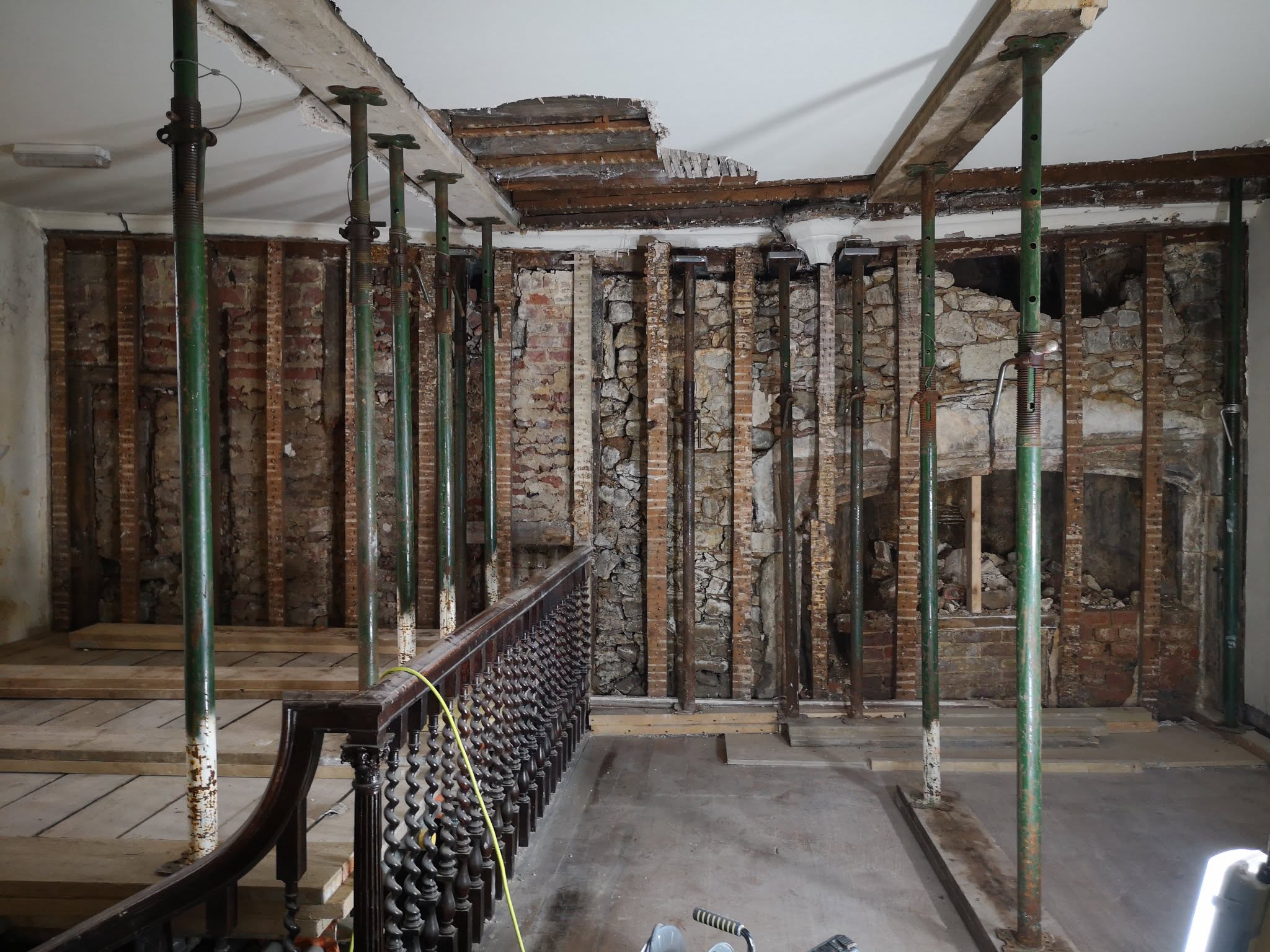
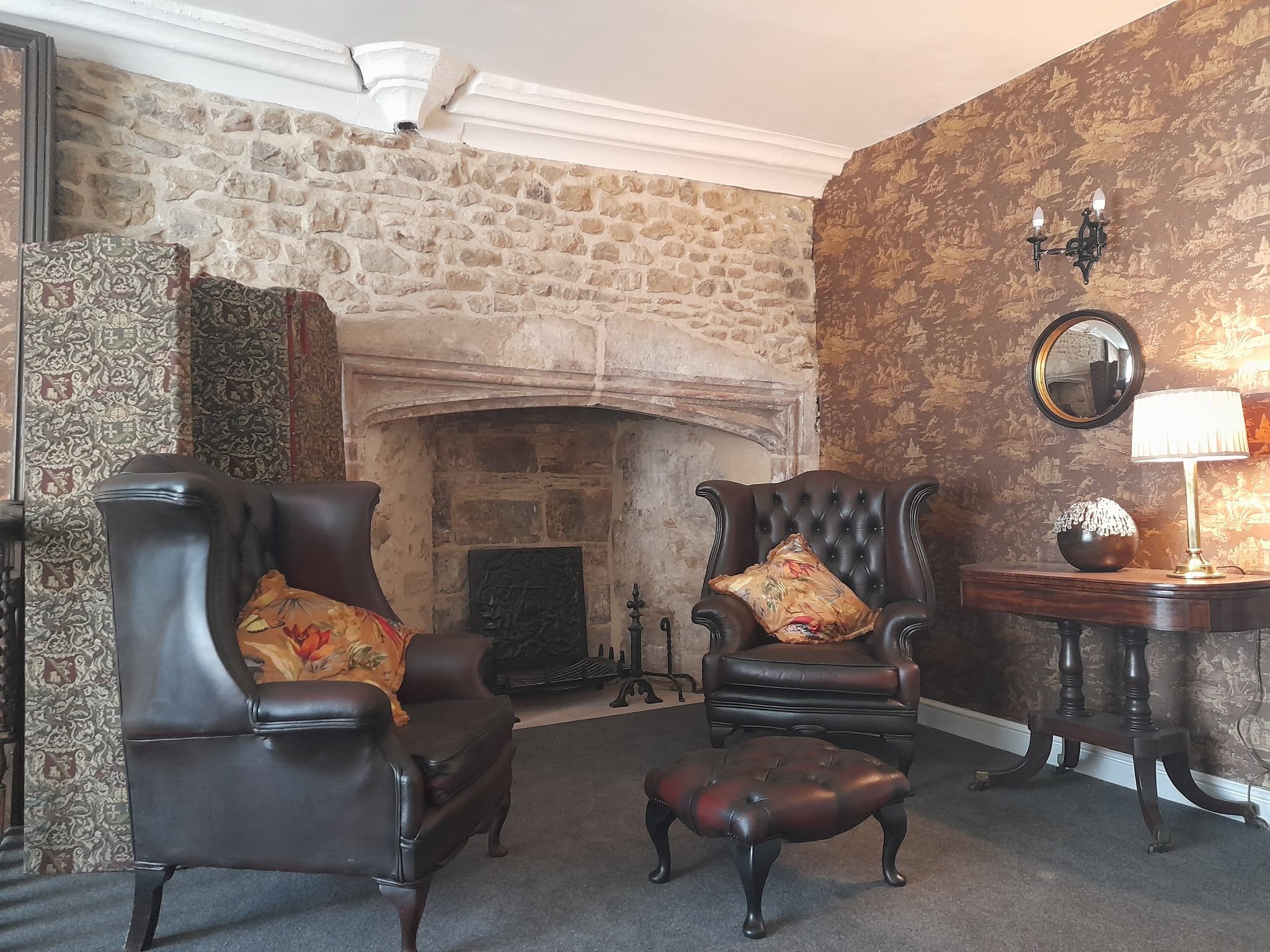
The room stripped back to its frame with the medieval walling exposed, and the Tudor fireplace as visitors find it today.
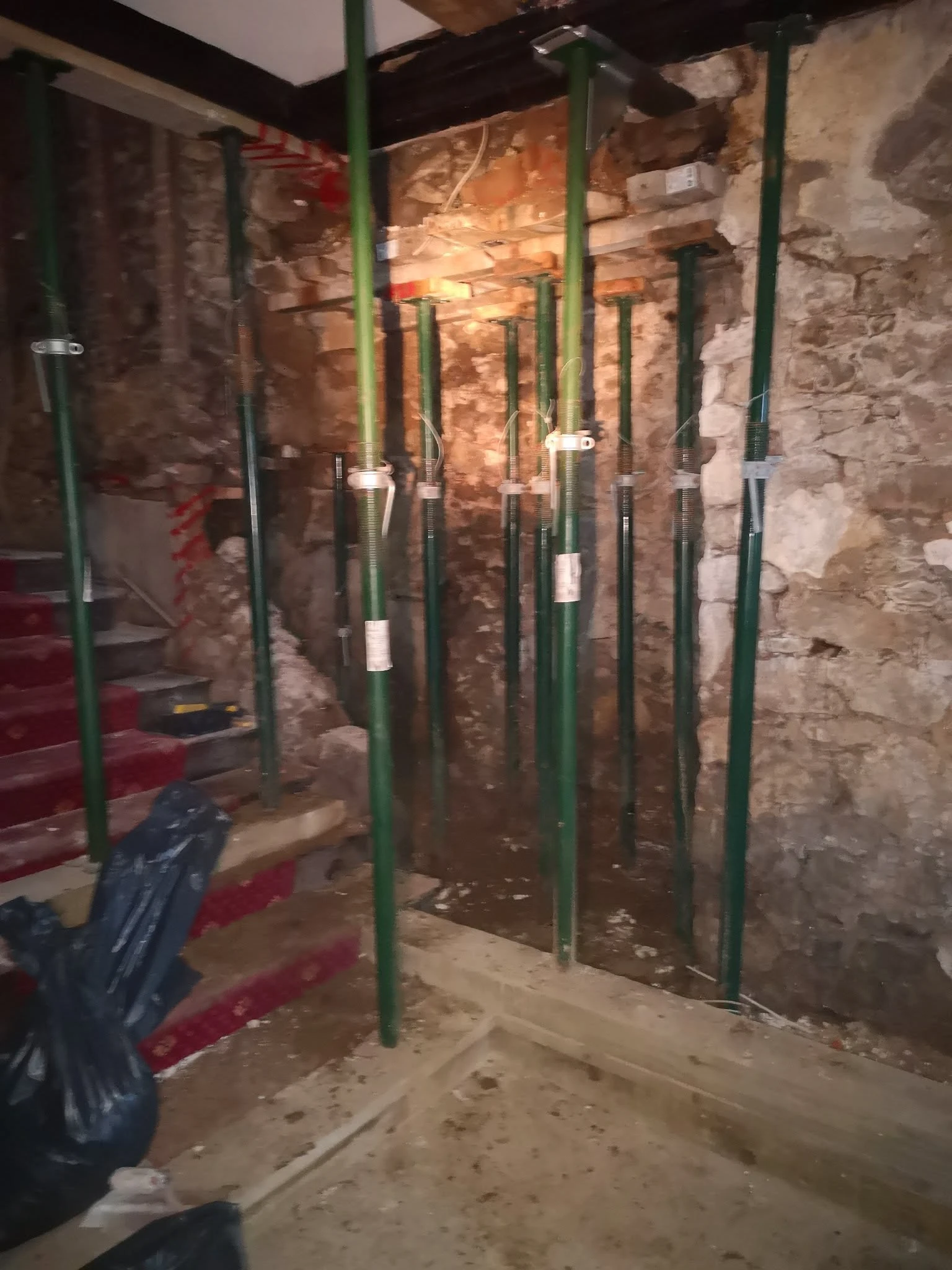

Fragile evidence stabilised and left visible, so the older fabric still reads within the finished room.
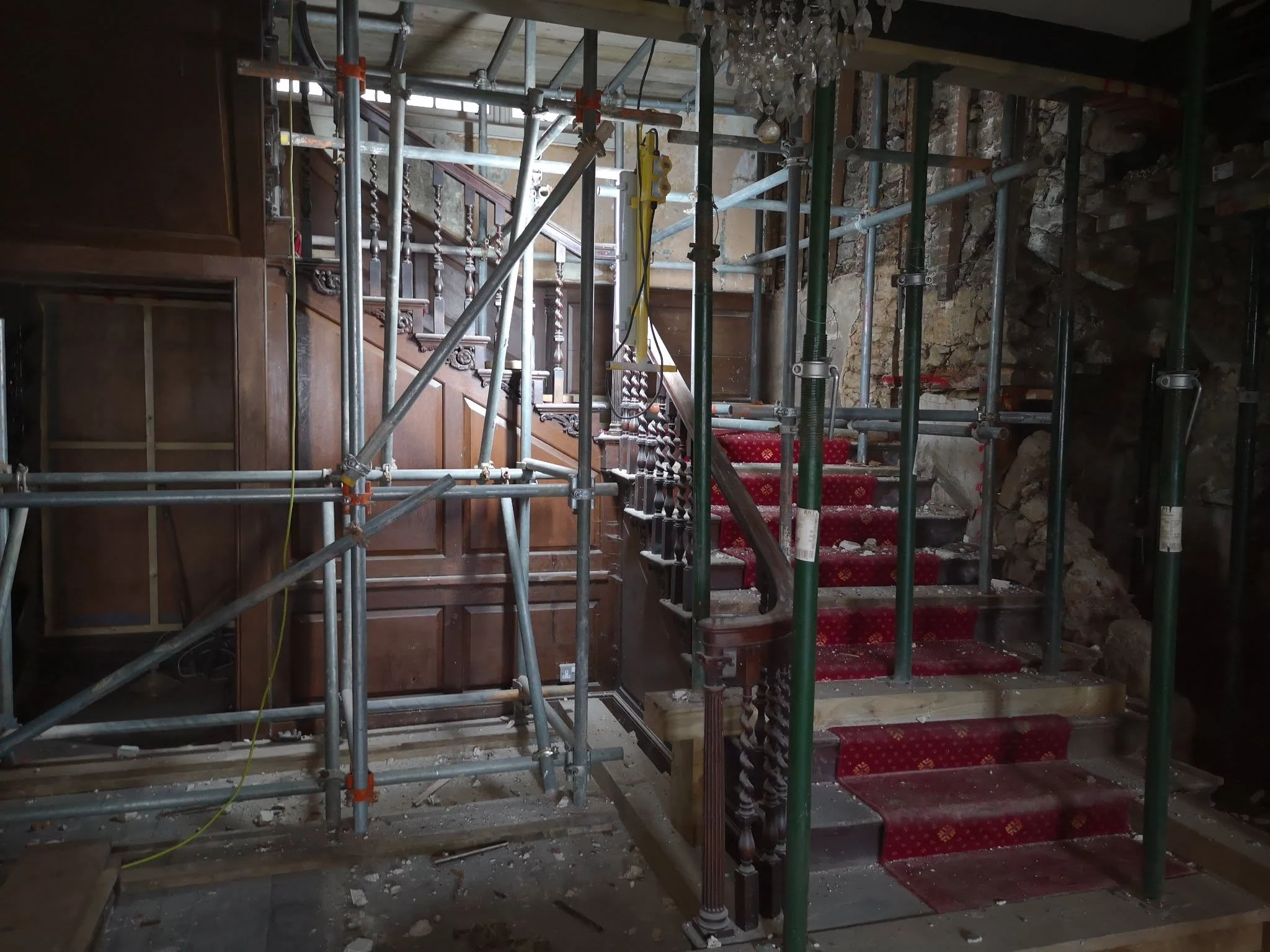
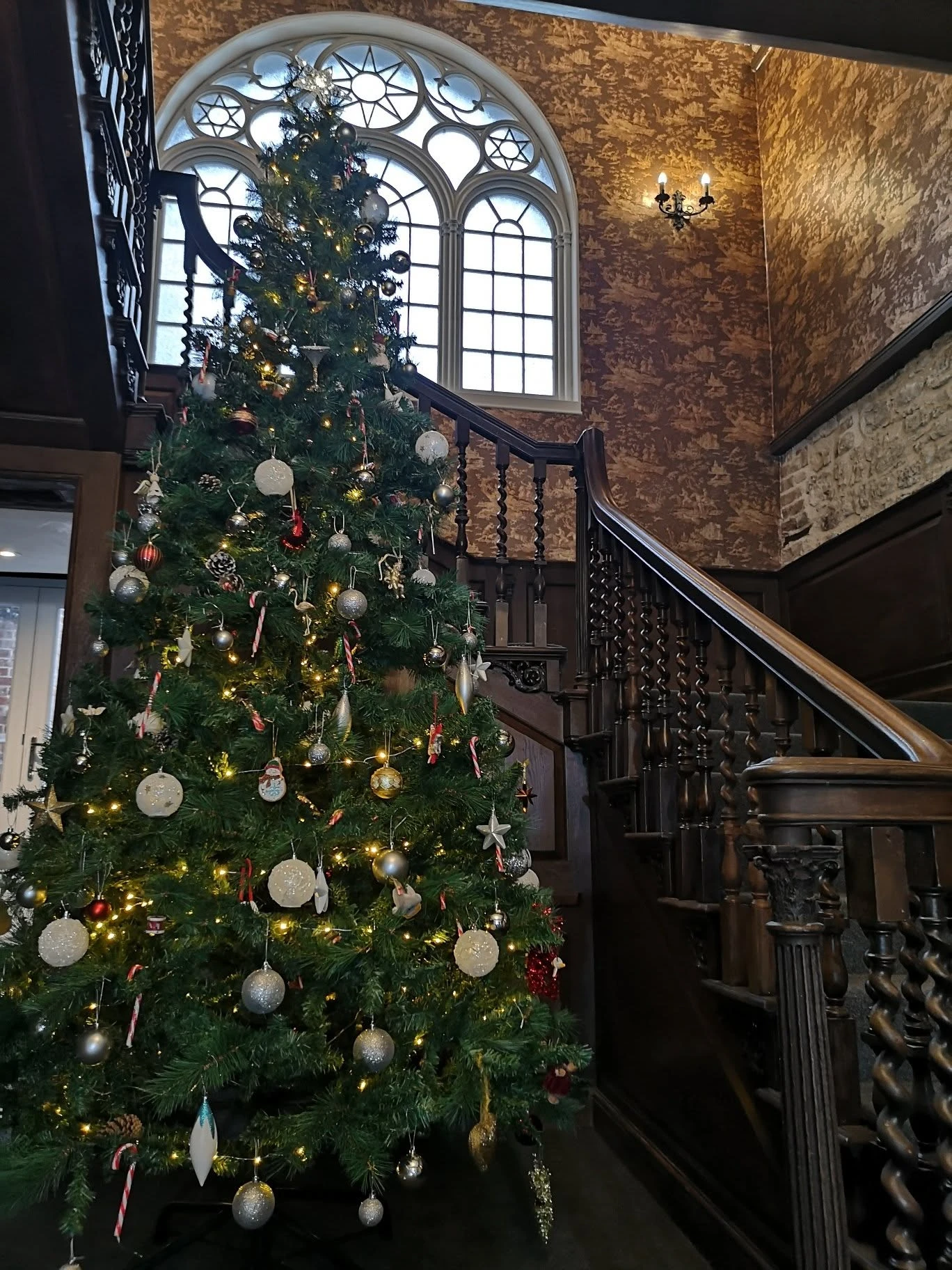
Scaffolding and structural work giving way to a space that is lived in and celebrated once again.
Historical Significance
Evidence that Stone Court House did not begin as a Georgian building, but grew from a far older structure whose medieval fabric still survives within the present house.
Did You Know?
The medieval wall may be among the oldest surviving parts of Stone Court House.
Coloured plaster fragments indicate that earlier interiors may have been much brighter than the later dark-oak period suggests.
A rare first floor Tudor fireplace suggests this area was once an important domestic room.
Oyster shells found during restoration are a useful clue to historic diet, trade, and building layers.
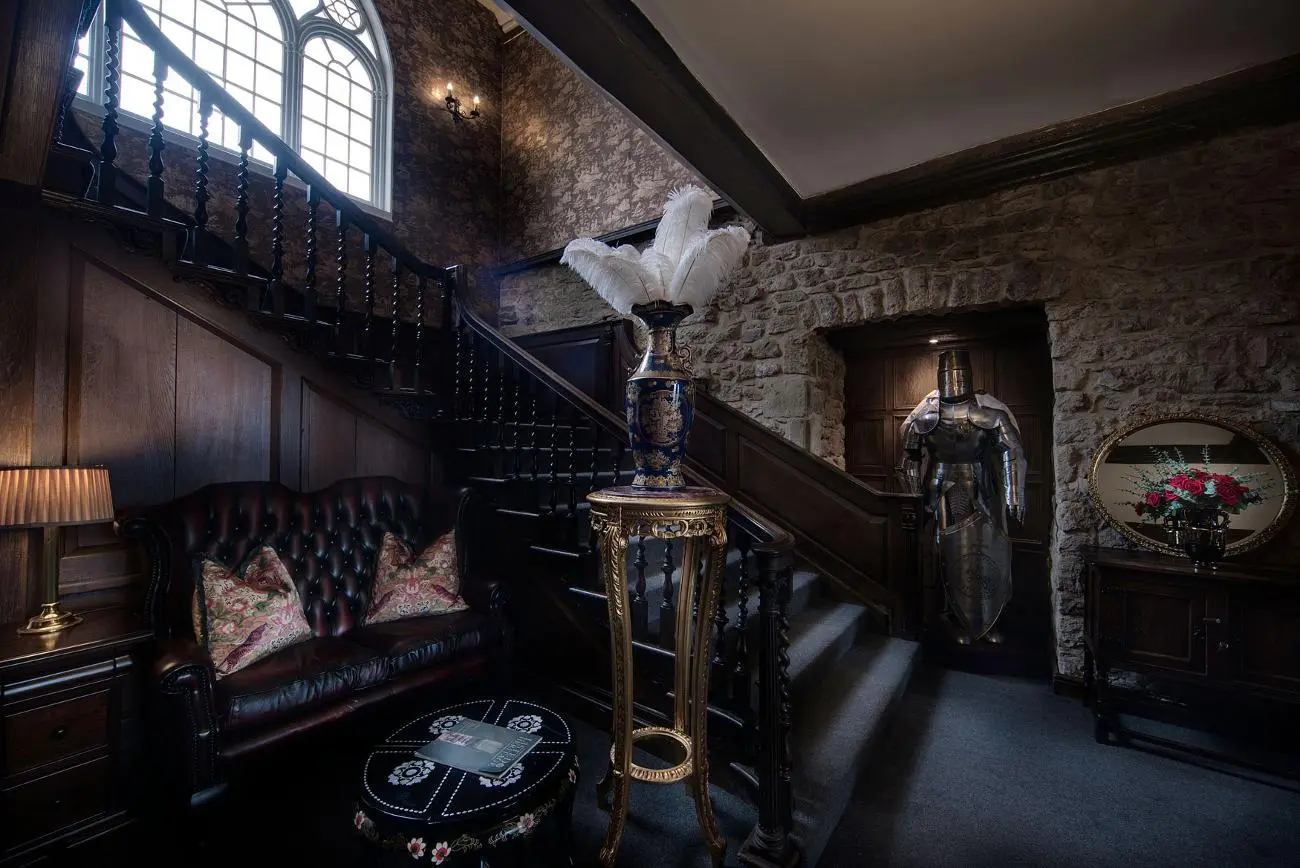



WEDDINGS AND ACCOMMODATION · MAIDSTONE, KENT
Book Your Wedding At Stone Court House
Uncover the details, beauty and atmosphere that have made us Maidstone's top rated wedding venue.
Arrange a private wedding venue tour and step into history for your big day.
01622 200391
WEDDINGS | ROOMS & SUITES | MEETING & EVENTS | SPECIAL OFFERS | ABOUT | CONTACT
