History & Story
The Knight In Shining Armour — Sir Arthur, Guardian Of The House
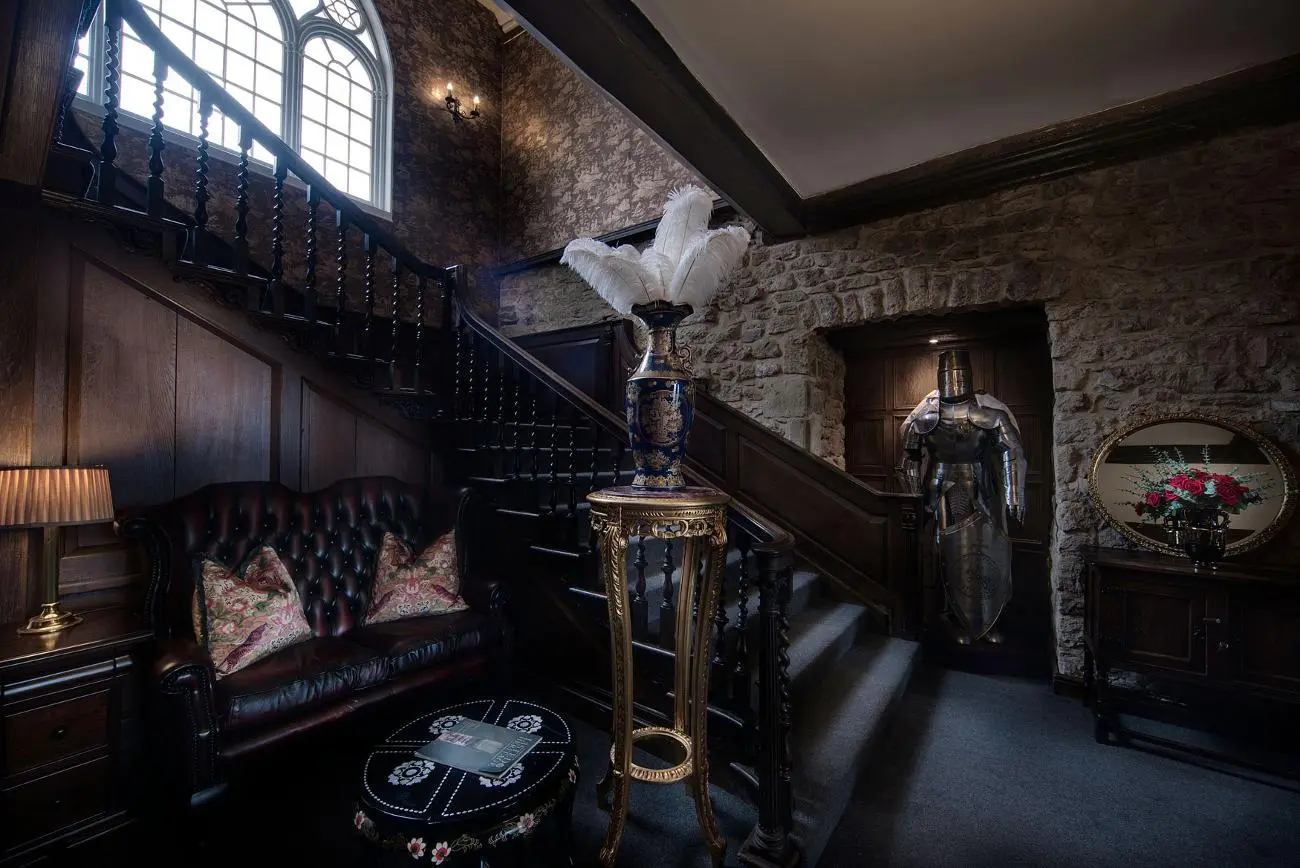
Armour has long carried associations of protection, honour, status, and ceremony. In medieval and Tudor households, armour was not only practical military equipment; it could also be displayed as a sign of rank, lineage, loyalty, and preparedness. At Stone Court House, Sir Arthur adds theatrical character while also drawing attention to the medieval layers nearby, including the garderobe doorway and timber lintel that survive beside the later staircase.
Placed close to the entrance, the figure of a knight also works as a form of symbolic guardian. Visitors arriving at the house meet him beside evidence of daily medieval life, where ceremony and practicality sit side by side. The nearby garderobe is an important reminder that even high-status medieval buildings needed carefully managed facilities for ordinary human needs.
His presence helps visitors connect with the house in a more immediate and imaginative way. Rather than seeing history only as stone, plaster, and documents, the knight gives the space a sense of personality, inviting guests to notice the older fabric around him. With the garderobe so close by, visitors sometimes joke that even Sir Arthur may be waiting his turn, a playful reminder that medieval houses had very practical needs as well as grand appearances.
Today, Sir Arthur stands as a playful but powerful symbol of guardianship. Visitors can use him as a stopping point: look around him for the medieval clues nearby, including the garderobe evidence, surviving timber lintel, and the older fabric embedded beside the later staircase.
Personal Restoration Note
Sir Arthur quickly became more than decoration to us. He gives visitors a smile, but he also helps point them toward some of the oldest and most surprising features nearby. In that way, he feels like a guardian of the house and its stories.
CALL NOW
Historical Significance
A reminder that public authority rested on private concentration, and that judgement was formed in stillness long before it was delivered in the courtroom.
Did You Know?
The knight is known as Sir Arthur.
Displayed armour in historic houses could suggest lineage, loyalty, and preparedness as much as battle.
The contrast between armour and toilet evidence helps show the full life of a medieval house: ceremonial, practical, noble, and human.
Armour was associated with protection, honour, status, ceremony, and the public display of rank.
Sir Arthur stands near evidence of the medieval garderobe and its surviving timber lintel.
Sir Arthur helps visitors notice the medieval features around the entrance and staircase.
WEDDINGS AND ACCOMMODATION · MAIDSTONE, KENT
Book Your Wedding At Stone Court House
Uncover the details, beauty and atmosphere that have made us Maidstone's top rated wedding venue.
Arrange a private wedding venue tour and step into history for your big day.
01622 200391
WEDDINGS | ROOMS & SUITES | MEETING & EVENTS | SPECIAL OFFERS | ABOUT | CONTACT
